

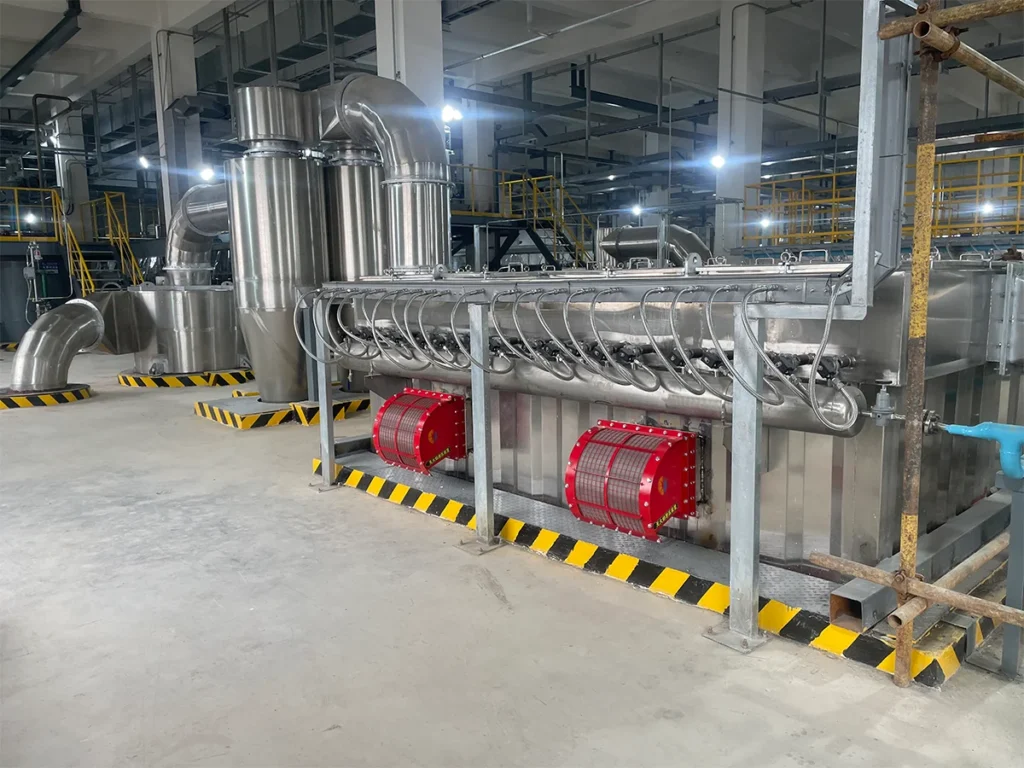
Introduction: Throughout the manufacturing sector—including the chemical, pharmaceutical, and new energy material production industries—the drying process typically consumes the most energy and is often one of the most technologically advanced processes on the production line. However, when companies decide to procure drying systems, they often create “Information Silos.”
The procurement department’s research is limited to the initial price, the R department’s scope is restricted to the quality of laboratory test results, while the plant operations team must bear the losses from downtime caused by equipment maintenance in addition to paying high electricity bills.When R and procurement departments operate in isolation, it often leads to equipment designs with performance far exceeding laboratory requirements, consuming excessive energy to maintain operations.
Why is it necessary to break down cross-departmental barriers when selecting drying equipment?
Dryers perfectly illustrate the phrase “low acquisition cost, high operating cost.” After ten years of operation, a dryer’s steam and electricity consumption can reach three to ten times its initial cost.
Unless there are unified and objective evaluation and measurement standards that combine Total Cost of Ownership (TCO) with pilot-scale material testing and evaluation, it is impossible to determine the optimal plant asset investment solution that will yield stable profits.
The “genetic type” of drying equipment depends on its raw materials. One must consider not only the moisture content but also the shape of the material (paste or crystalline particles), and the ease with which the material adheres to the dryer walls and clumps upon entering the machine. If the material is particularly heat-sensitive or contains organic solvents that need to be recovered, an indirectly heated disc dryer (tray dryer) should be selected; if the filter cake needs to be instantaneously dehydrated and pulverized, a directly heated flash dryer should be chosen.
Furthermore, all new factories must ensure the transparency of the data used and integrate automation systems into the architectural design. The drying process cannot exist as an independent process; it must be able to integrate seamlessly and continuously with upstream and downstream processes and support PLC automation. The capacity loss of a drying line during each product changeover depends on the amount of residual product in the equipment and whether the equipment features Cleaning-in-Place (CIP) functionality.
Many companies find that laboratory test results may be technically correct, but when entering the large-scale product development phase, laboratory tests cannot accurately reflect the actual physical limits of mass production, such as material residence time, thermal resistance based on material thickness, and localized overheating on the equipment. The only way to collect actual production parameters and bridge the gap between RD and production is to require all equipment manufacturers to conduct pilot-scale testing.
If the selection of drying equipment can break down information silos and establish synergy within the organization, it will ensure that the system you purchase is not just a machine, but a profitable business model.