

When manufacturers purchase equipment such as industrial dryers and hot air circulation ovens,
The most frequent question we receive is: “How many kilowatts (kW) is this oven?”
The intuitive logic of procurement teams is: the higher the power, the faster the heating; and the higher the temperature, the more thoroughly the material dries. Is this actually the case? It is only when the equipment goes online that they realize they have fallen into a trap.
Thermodynamics: High Energy Consumption Does Not Equal a High “Dehydration Rate”
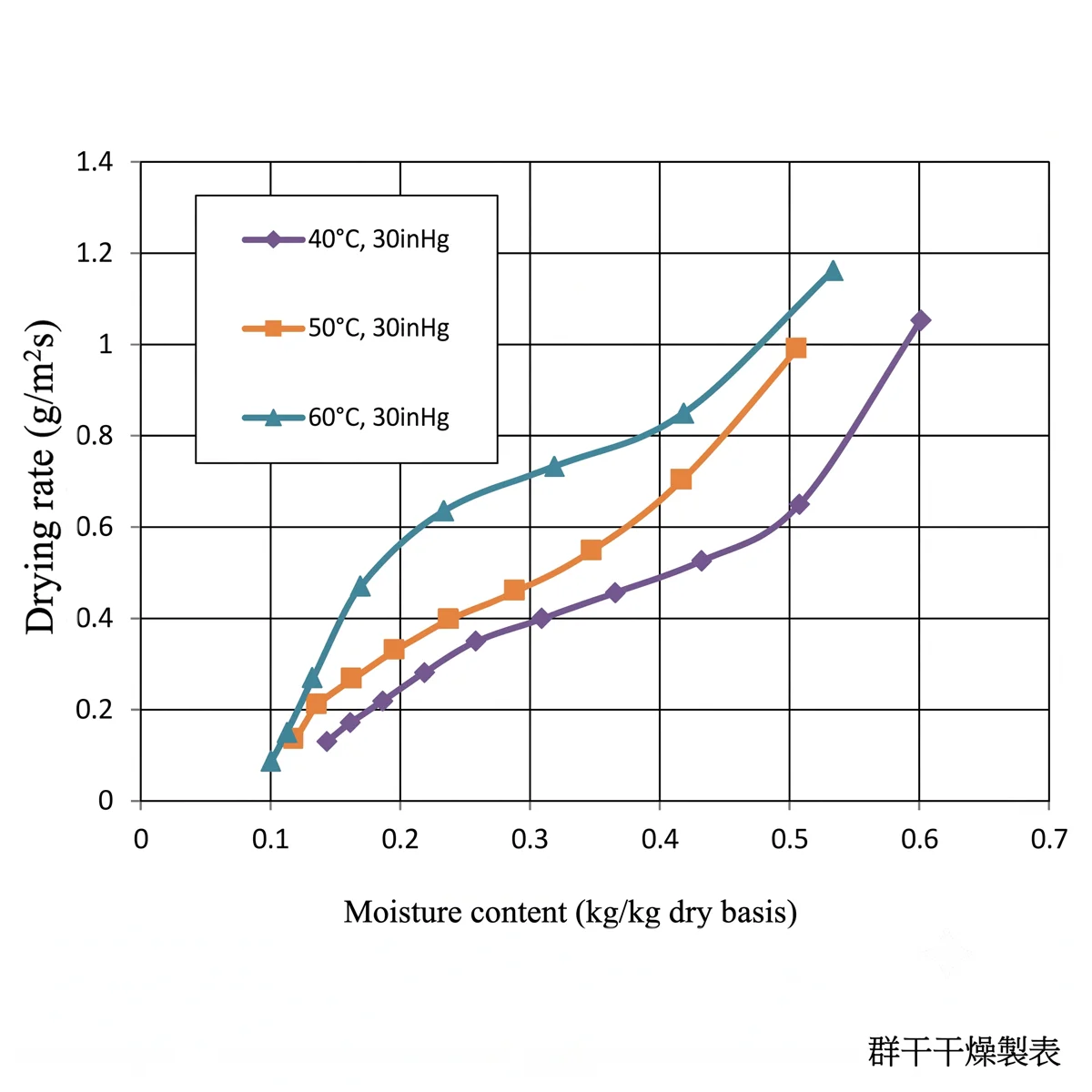
Looking closely at the chart above, when the moisture content drops to 0.1–0.2 (the “final drying stage”), have you noticed that whether it is 40°C, 50°C, or 60°C, the three lines eventually converge at the same endpoint where the drying rate drops to nearly 0.1?
This illustrates two things:
1. When the surface of the material is dry and only trace amounts of internal moisture remain,
The dehydration speed is determined by the “internal physical structure of the material,” rather than the temperature of the external oven.
The biggest headache for owners is when a drying production line becomes an “electricity monster.” High-power heating elements can indeed raise the internal temperature of the oven to the set point at lightning speed, but “high temperature” does not equate to “drying.”
2. Fluid Dynamics: Uneven Material Heating is Directly Proportional to High Scrap Rates
Fluids (hot air) in a closed space will always follow the “path of least resistance.” When high-power heaters continuously release heat, if the equipment has not undergone precise Computational Fluid Dynamics (CFD) design, the hot air will create severe “airflow dead zones” and “local vortices” within the oven. Therefore, the drying method and cooling design become exceptionally important.
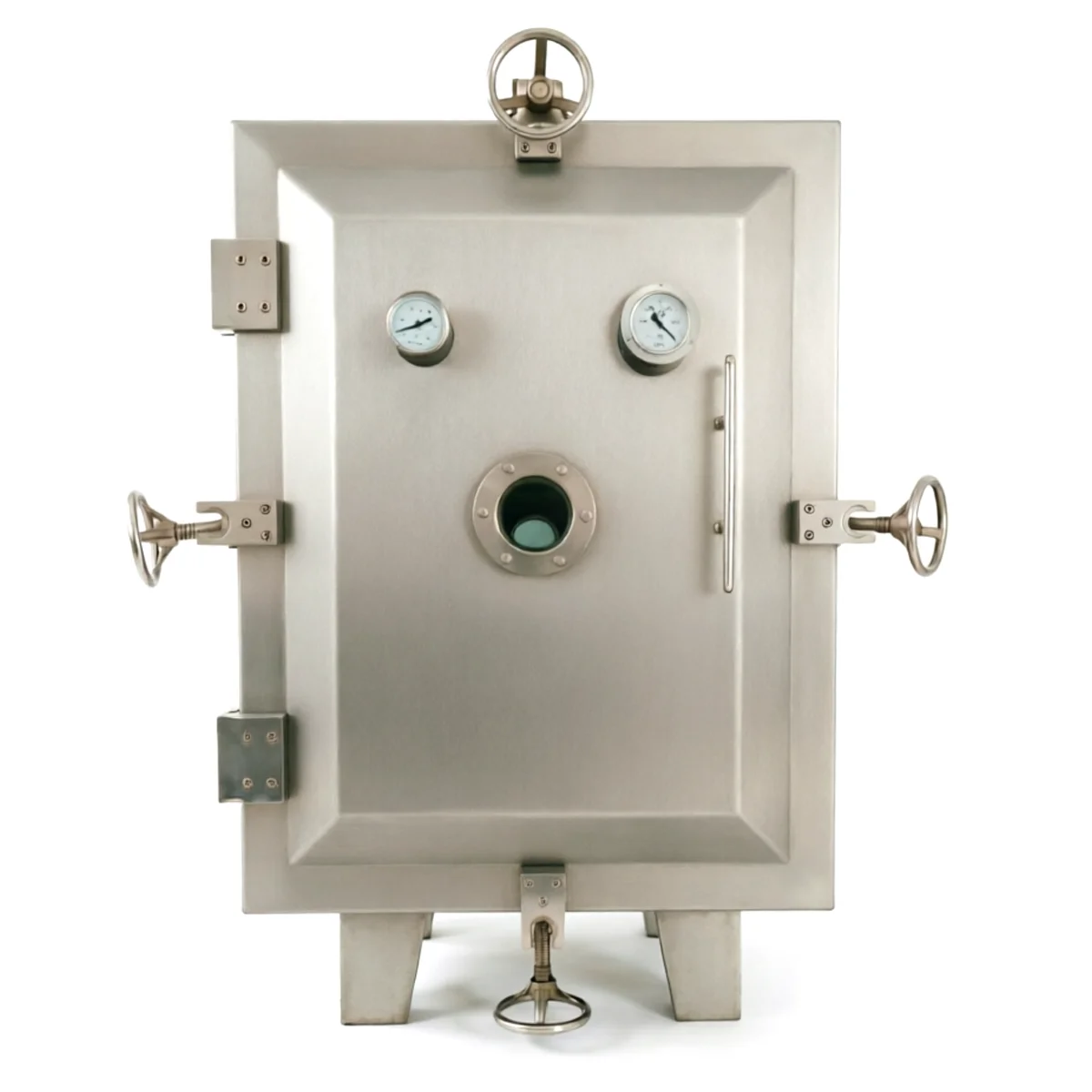
Therefore, when modern precision industries plan their manufacturing processes, the drying method and cooling design are of critical importance. Addressing these pain points is the core objective in the design and application of vacuum dryers.
The logic of vacuum drying is not to go head-to-head with heat. It works by extracting a vacuum to reduce the pressure inside the chamber, allowing trace moisture within the material to vaporize at low temperatures of 40°C – 60°C, thereby directly overcoming the physical structure of the material. In practice, vacuum drying can completely eliminate the airflow dead zones found in traditional hot air circulation. High dehydration rates and yield rates can be achieved without increasing power, while simultaneously improving production efficiency and reducing energy loss—this is true process optimization.